Thrive Prep+ MVP: Validating B2C Demand in a B2B Product
Thrive Prep+ is a candidate-facing product designed to enhance the hiring experience through practice assessments and an extended personality report with tailored interview guidance. The project tested direct candidate demand within a B2B ecosystem to open a new revenue stream while improving user value and brand differentiation.
I led the product from concept to MVP, starting with user research and hypothesis development, followed by rapid prototyping, stakeholder alignment, and data instrumentation. Using Lovable for early interactive prototypes streamlined collaboration with our designer in Figma and saved significant design and engineering time before build.

Company
Thrive Technology
Product Type
B2C feature within a B2B HR assessment platform
Project scope
End-to-end MVP from concept to release
My role
Product Manager (strategy, research, analytics, prototyping)
1 Designer, 3 Engineers, 1 Marketing Lead, 1 Psychologist
4 months
Outcome
Validated B2C demand and saved 760+ design and engineering hours
Challenge
This was Thrive’s first B2B2C product, meaning our “customers” were candidates taking assessments provided by client organisations. The main challenge was designing and validating a paid candidate experience without risking client trust. We needed to test whether candidates would engage with or pay for additional features, while ensuring transparency and consistency across every communication touchpoint.
Goals and Metrics
Commercial validation goals
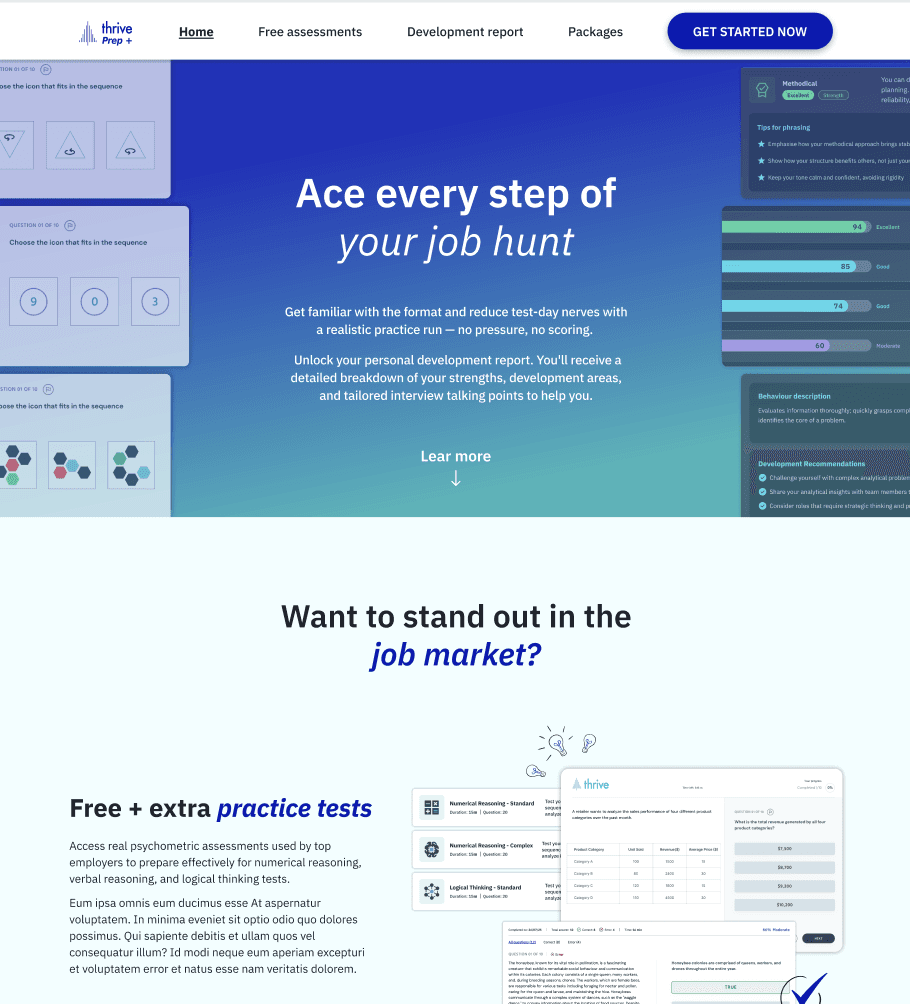
20% of candidates who completed a Thrive assessment would click to try practice assessments
50% of those would complete at least one practice session
30% would complete all practice assessments (around 6% overall)
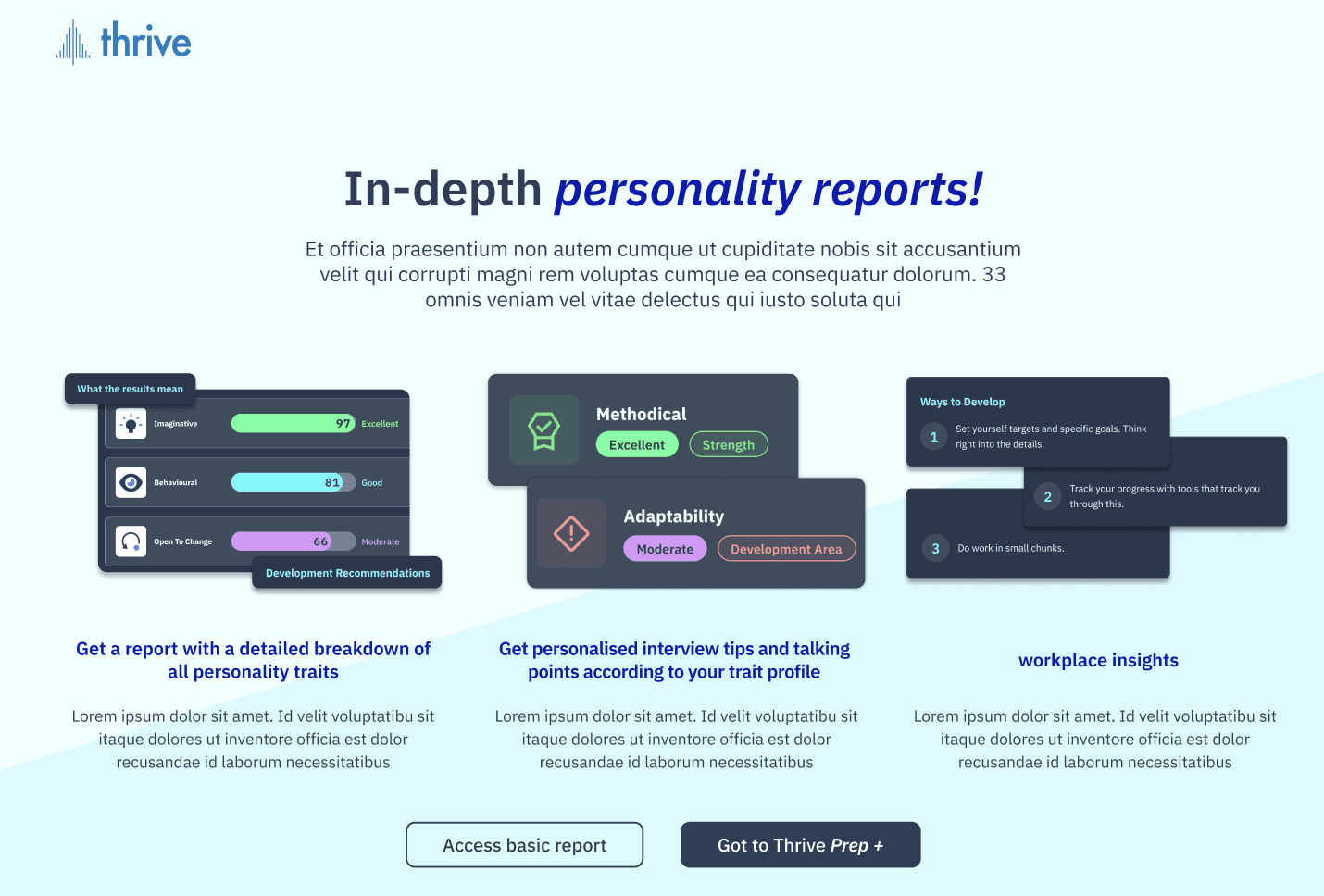
15% of candidates would click to learn more about the in-depth Thrive Prep+ report
15% of those (≈2.25% overall) would click to purchase
Email-based hypotheses
50% open rate for the upsell email sent three days post-assessment
20% click-through to the landing page
5% of those (≈2.5% overall) would click to purchase
120+
Design Hours Saved
640+
Engineering hours saved
£24K
Overall cost saved
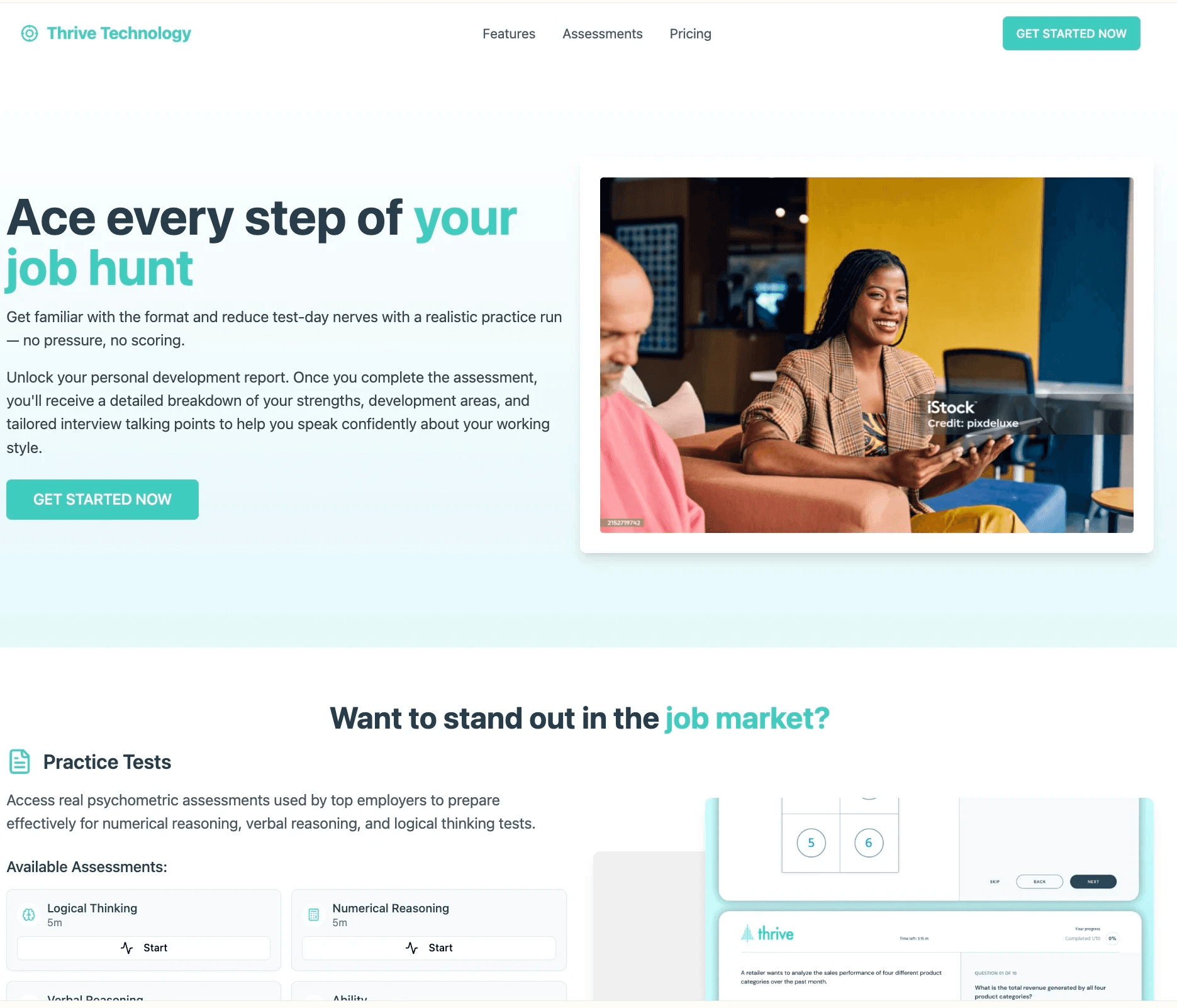
Rapid Prototyping using Lovable (step 3)
Process
1. Discovery
I led interviews and focus groups with Thrive candidates to understand their motivations and pain points across the assessment journey. Research revealed strong interest in low-pressure practice opportunities and a need for richer, more practical feedback post-assessment.
2. Definition and Scoping
I translated insights into a structured set of hypotheses and success metrics focused on conversion, engagement, and satisfaction. Instead of committing to a full build, we scoped a lightweight MVP that could validate demand for both practice and extended feedback features.
3. Prototyping and Stakeholder Alignment
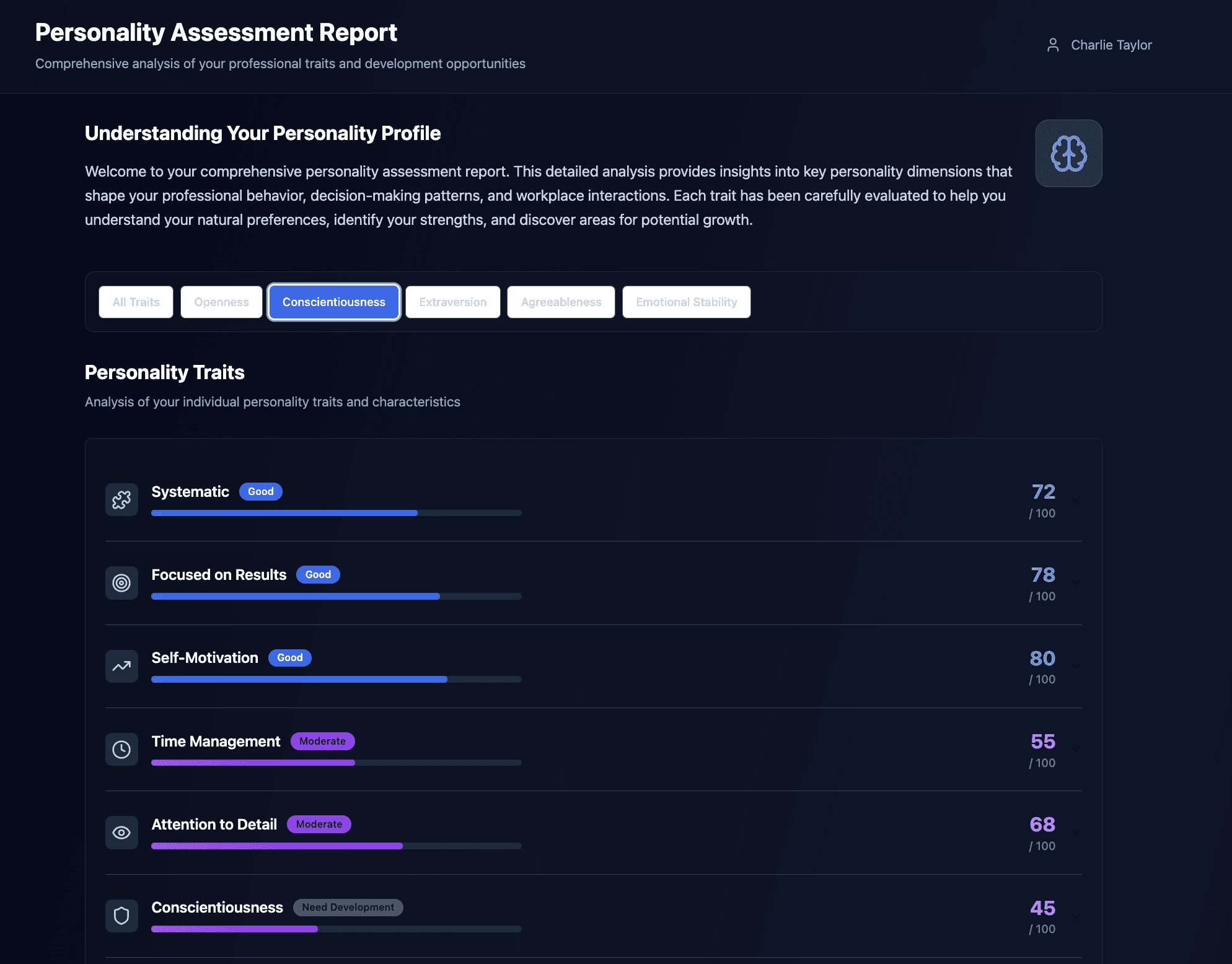
I used Lovable to create an interactive prototype that demonstrated the end-to-end flow for candidate entry points, upsell messaging, and purchase intent. This approach aligned stakeholders early and enabled quick iteration. Once validated, I partnered with our product designer to rebuild the experience in Figma, refining interaction details and visual design for engineering handoff.
4. Experiment Design and Analytics Setup
Working with backend and frontend engineers, I defined event tracking schemas for Amplitude, Customer.io, and our admin system. Each step of the funnel, from email open to practice completion and report purchase, was mapped to ensure measurable, comparable data across both products.
5. MVP Launch and Data Collection
The MVP launched across all eligible candidates. I coordinated testing with marketing, design, and engineering to ensure stable delivery of email campaigns and accurate tracking of candidate journeys, focusing on conversion intent, engagement depth, and qualitative feedback.
Some early prototypes considered but not used
Key learnings
1. Start lean and validate early
This project taught me the value of starting with minimal scoping and letting evidence guide expansion. Writing a complete PRD too early led to scope growth before we had data to justify it. I learned that lightweight documentation and a clear metric framework at the outset make it easier to adapt direction without overcommitting resources.
2. Balancing trust within a B2B2C ecosystem
Building a candidate-facing experience inside a client-owned environment surfaced important lessons about trust and communication. Each decision, from copy tone to timing of upsell messages, required empathy for both the candidate and the employer. The process reminded me that in multi-stakeholder products, clarity and transparency are just as important as functionality.
3. Designing experiments that create mutual value
The most successful parts of the MVP were those that benefited both the business and the user. The practice assessments genuinely helped candidates build confidence while giving us behavioural data to inform future offerings. It reinforced for me that well-designed experiments can generate insight and deliver tangible user value at the same time.
Get Athos Pro